
Content warning: this investigation addresses sensitive topics related to the sexualization and sexual abuse of minors.
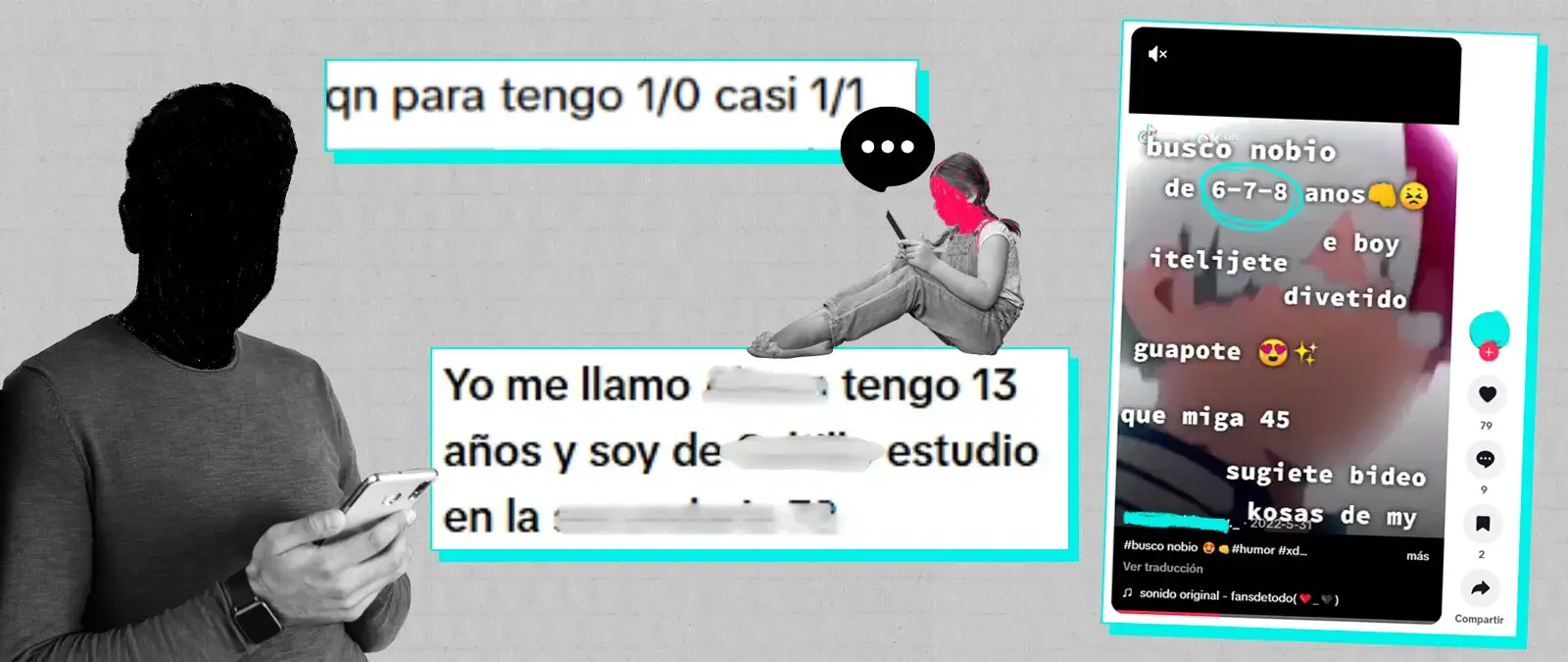
A buffet for pedophiles, who can enter videos to target minors or pose as one of them so that real children contact them. These are not isolated cases: we analyzed more than 100 videos seeking “virtualitos” to establish online romantic relationships with children aged 6 to 12, which together have amassed more than 3,5 million views. This is despite the platform’s rules stating that users under 13 are not allowed to register. This has been happening for at least five years. A half-decade in which the platform has acted as a springboard exposing children to grooming and recruitment by adult users, while leaving the images minors share in comments accessible to anyone.
The 100 videos we analyzed function as ads for "virtual boyfriends": they specify the ages, locations or characteristics that each user seeks in their ‘virtualito’. 33% of them were published on the platform in 2023, the year with the most videos in the sample. But even in 2025, 22% were published, the second highest figure. And it didn't stop there: in 2026, TikTok continue to be used to search for "virtual boyfriends" of these ages.
TikTok videos of “virtualitos” compiled by Maldita.es
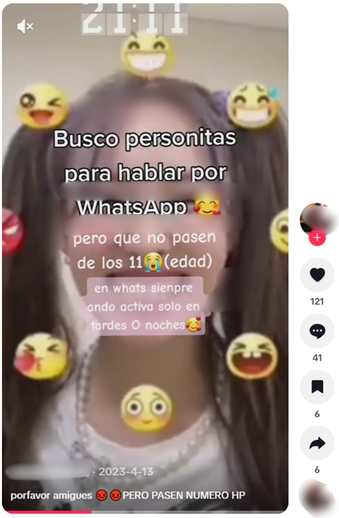
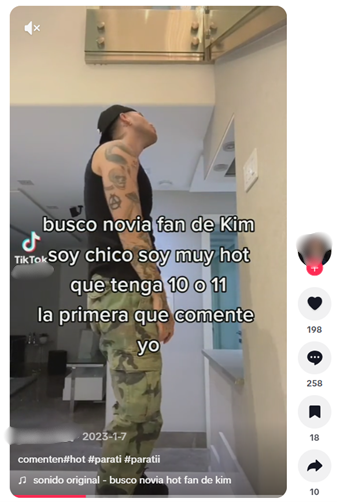
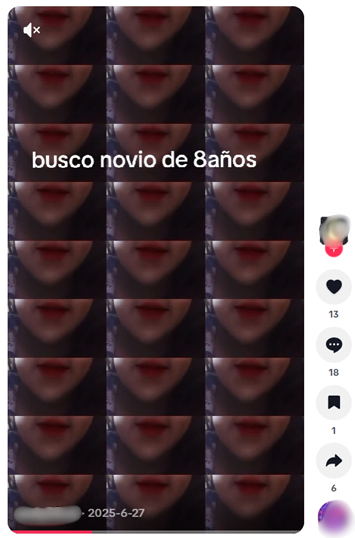
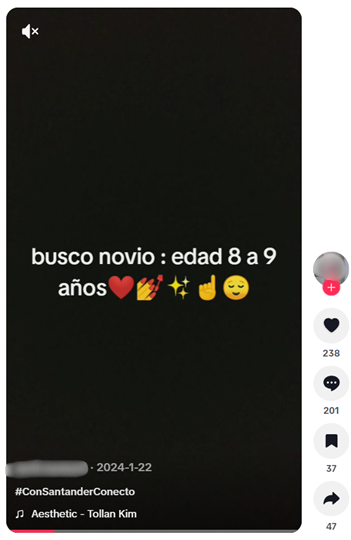
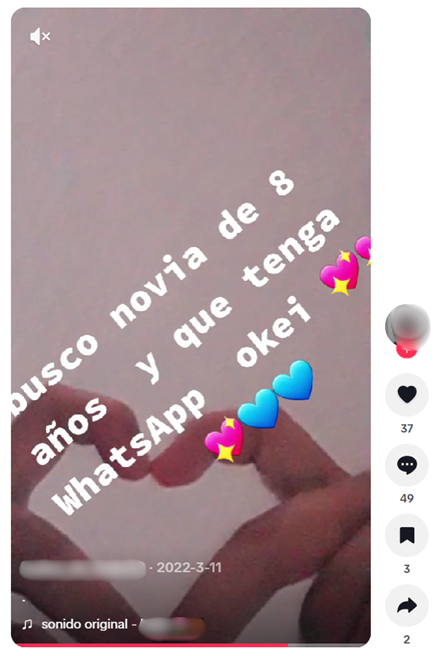
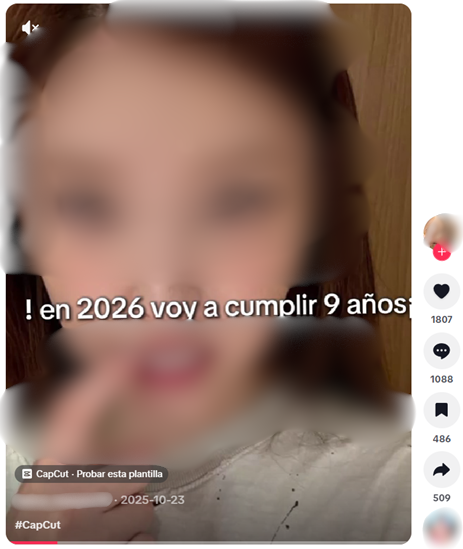
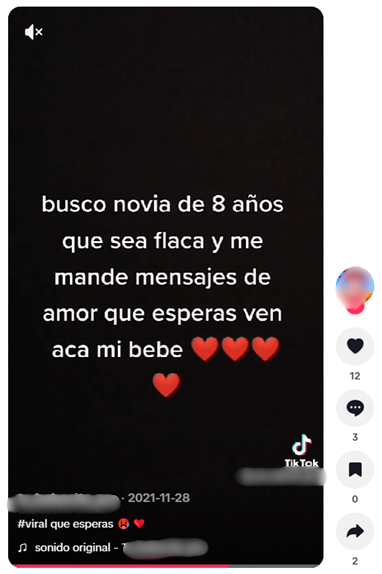
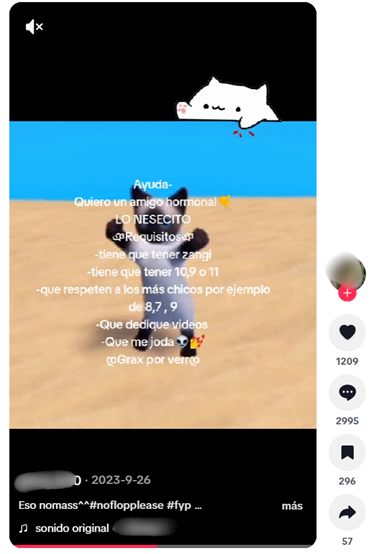
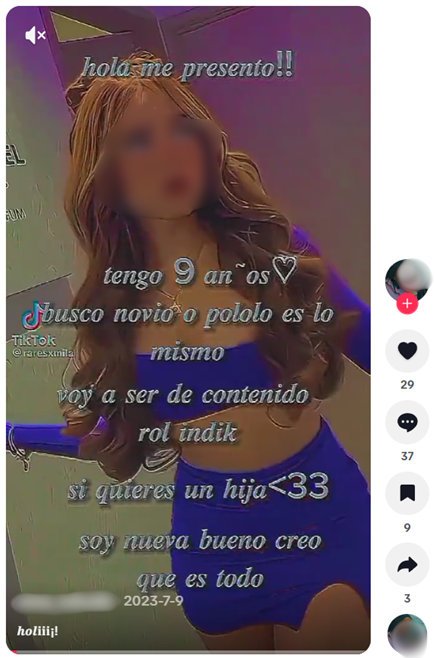
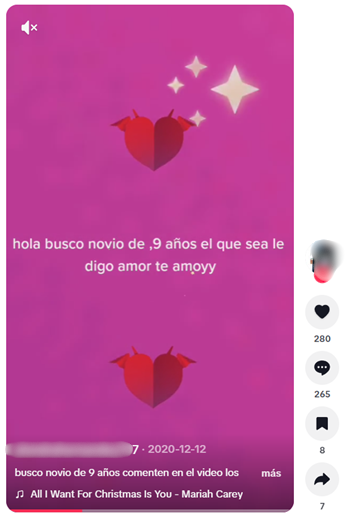
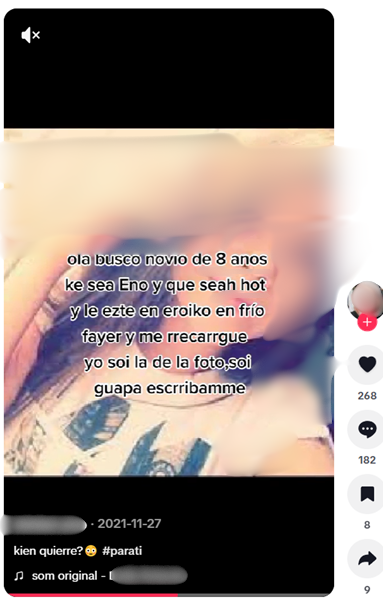
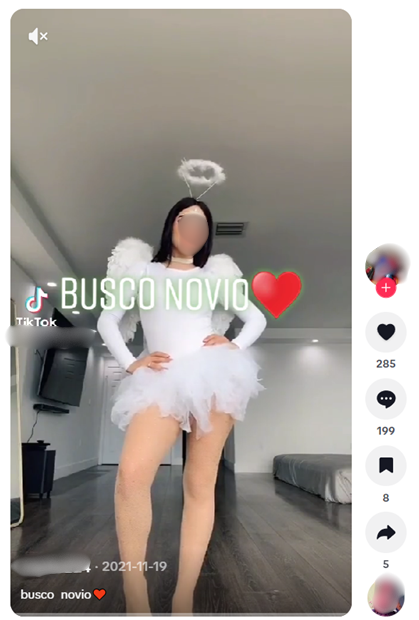
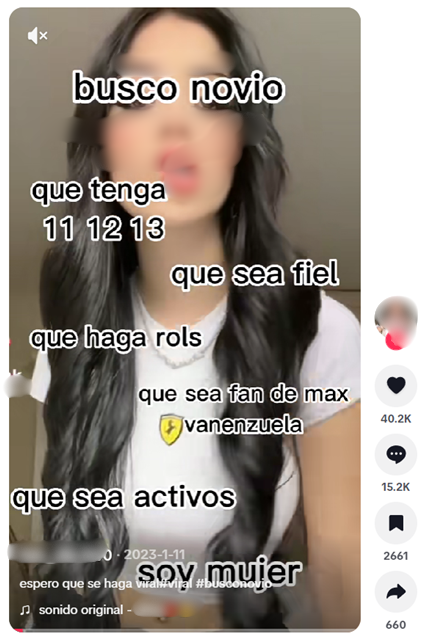
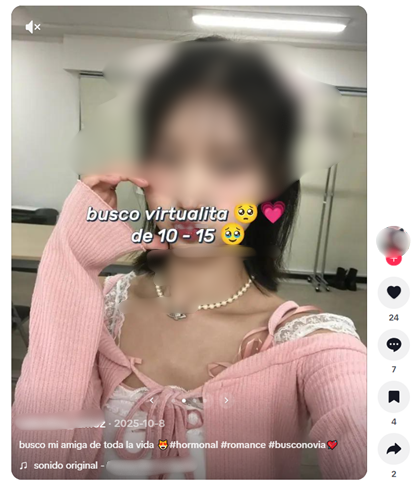
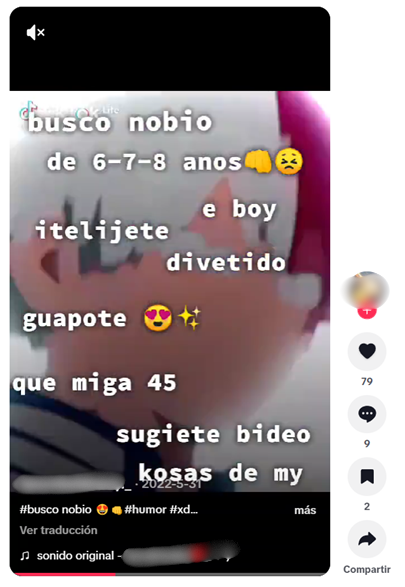
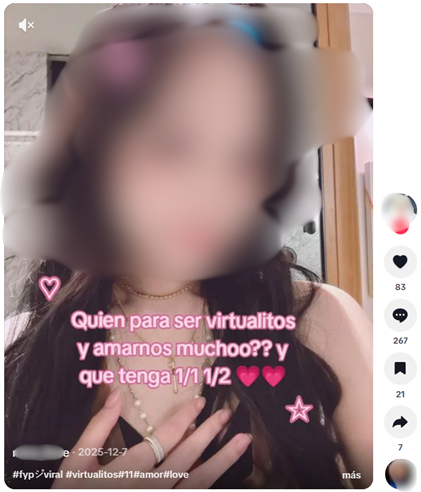
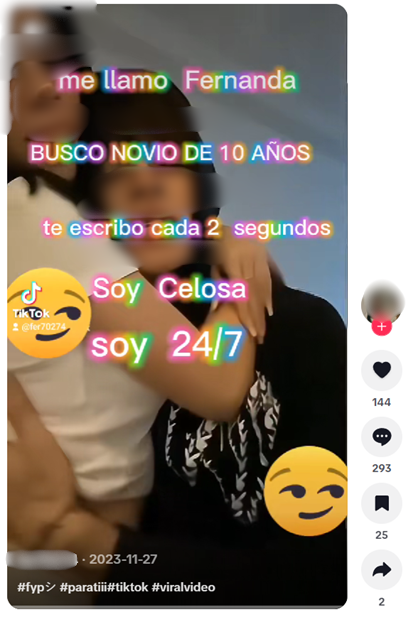
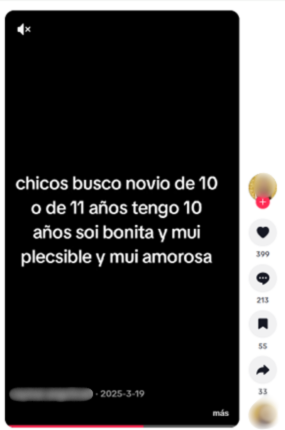
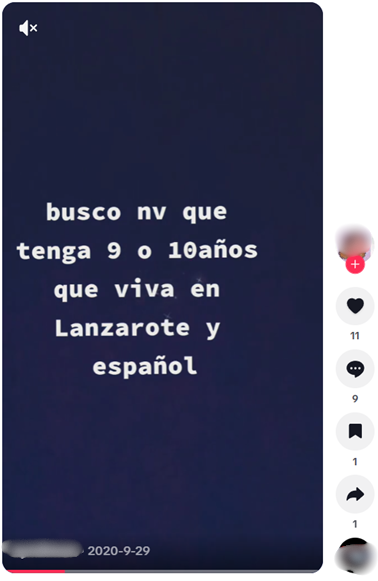
“Looking for a boyfriend who’s 110 (without the zero),” “8 years old and hot,” “living in Lanzarote”: this is how they use TikTok to find ‘virtual boyfriends’ aged 12 or younger
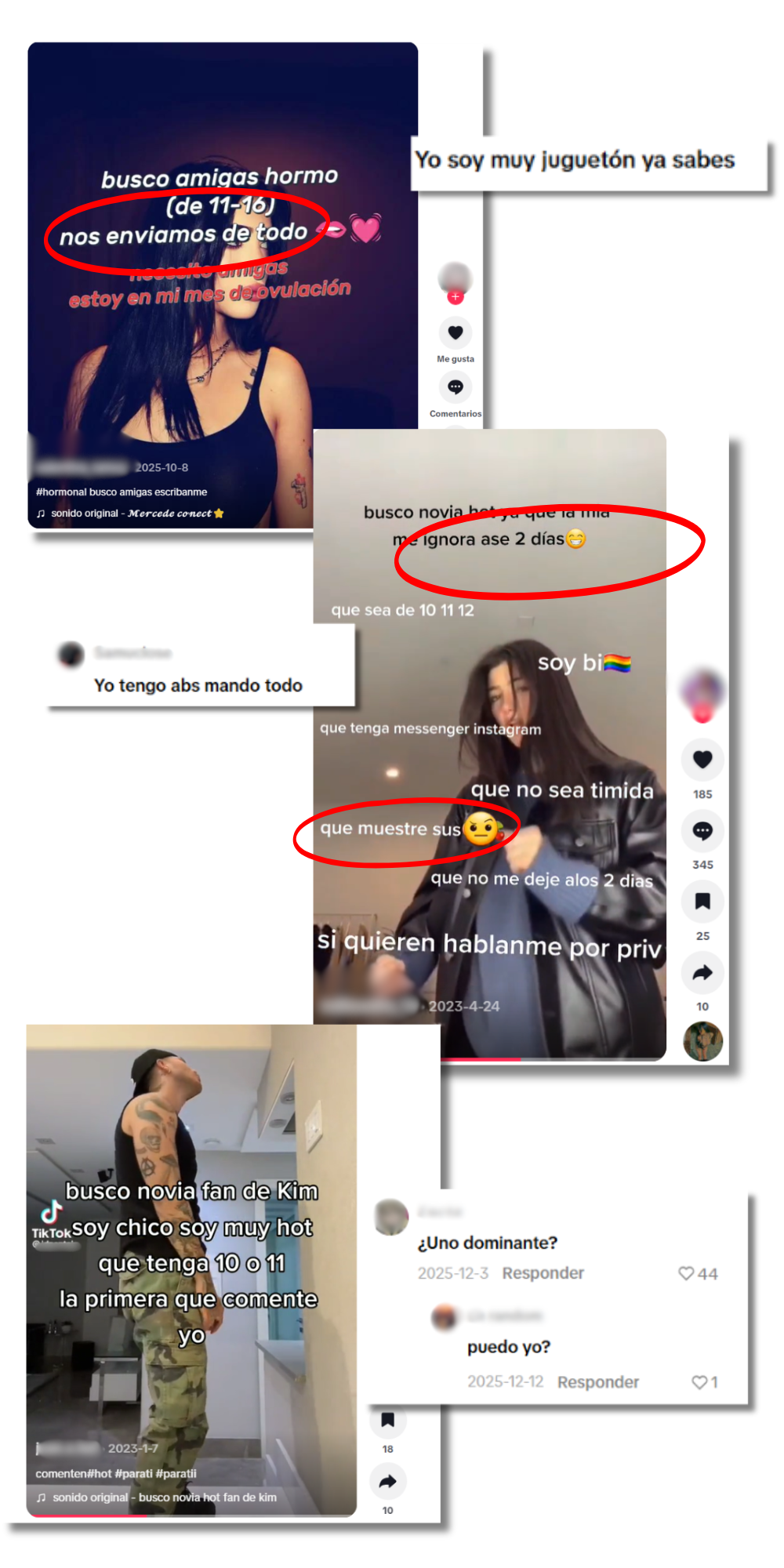
The age requirement is a common denominator when looking for a “virtual boyfriend”. Sometimes they say it outright (“I’m looking for a 10-year-old boyfriend”), but other times they camouflage it with tricks (“I’m 9+1” or “110 without the zero”).
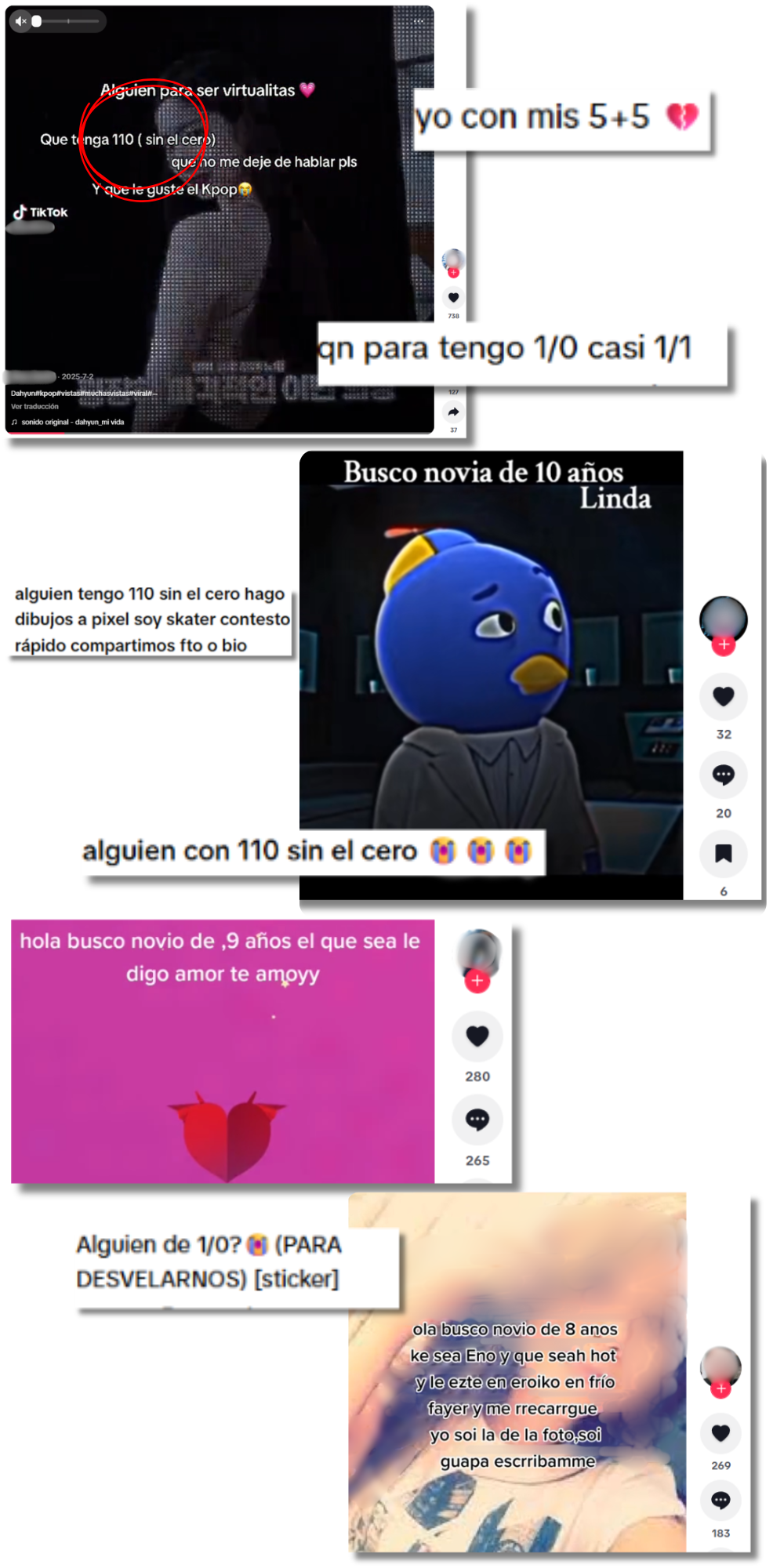
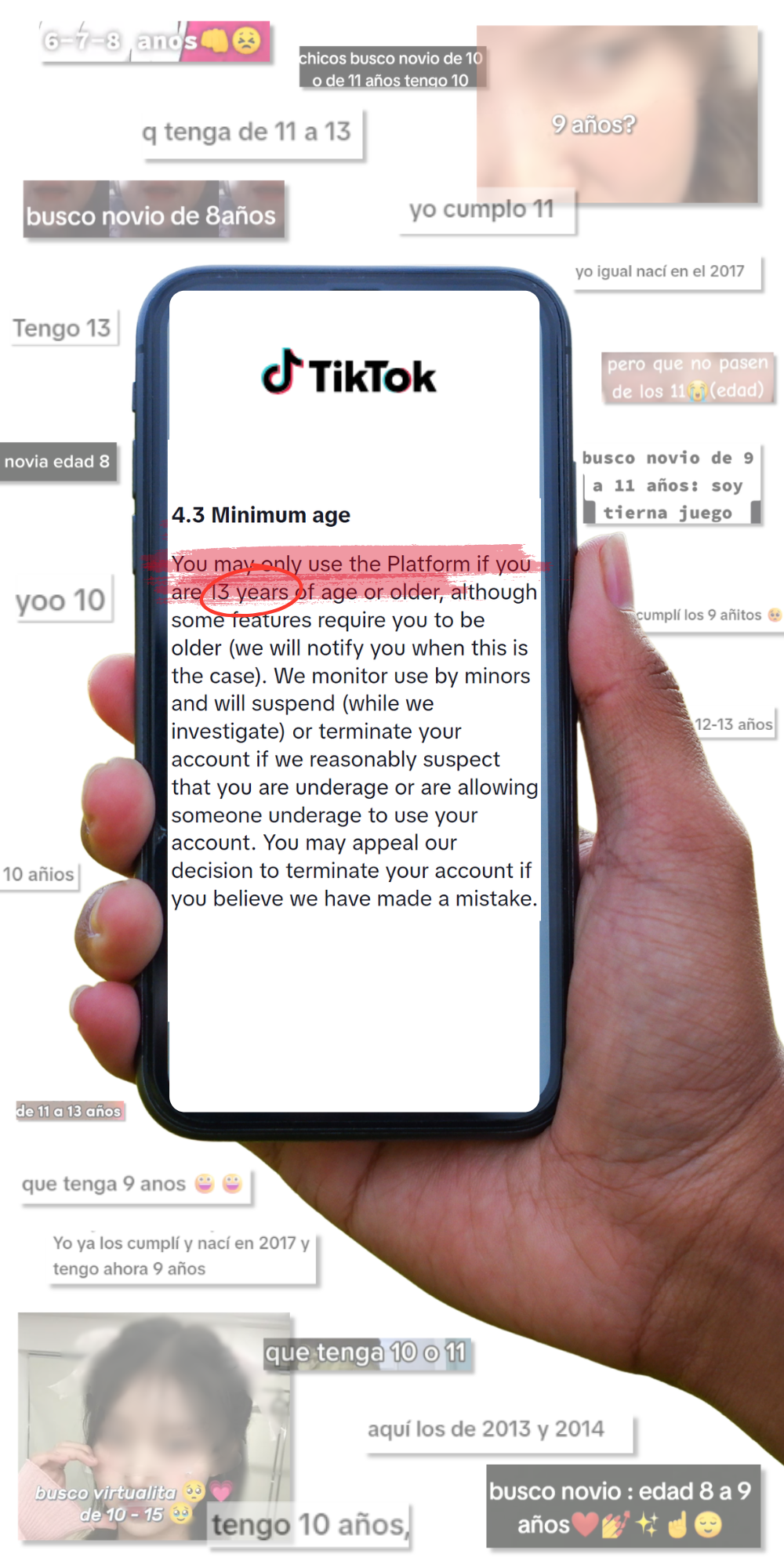
Behind the simple sums and calculations sometimes used to present ages lies a way to circumvent the platform's moderation. According to its rules, children under 13 cannot register on TikTok. However, this isn't always done consciously: "It's also done through imitation; that is, the child sees another user's profile with that bio and copies it without realizing they're bypassing a protection system, simply because 'that's what everyone else is doing’", explains Javier Sanz, criminology expert.
There's more. Minors also reveal their locations: "I'm from Spain," "I live in Lanzarote", "Anyone from Saltillo?". This personal information has garnered over 3,5 million views across the hundred videos analyzed by Maldita.es. These profiles also boast 263.530 followers and could be looking not only for a "virtual boyfriend", but also to meet them in person at these places. This poses a risk, given that it's not always clear whether adults or minors are behind these videos and comments.
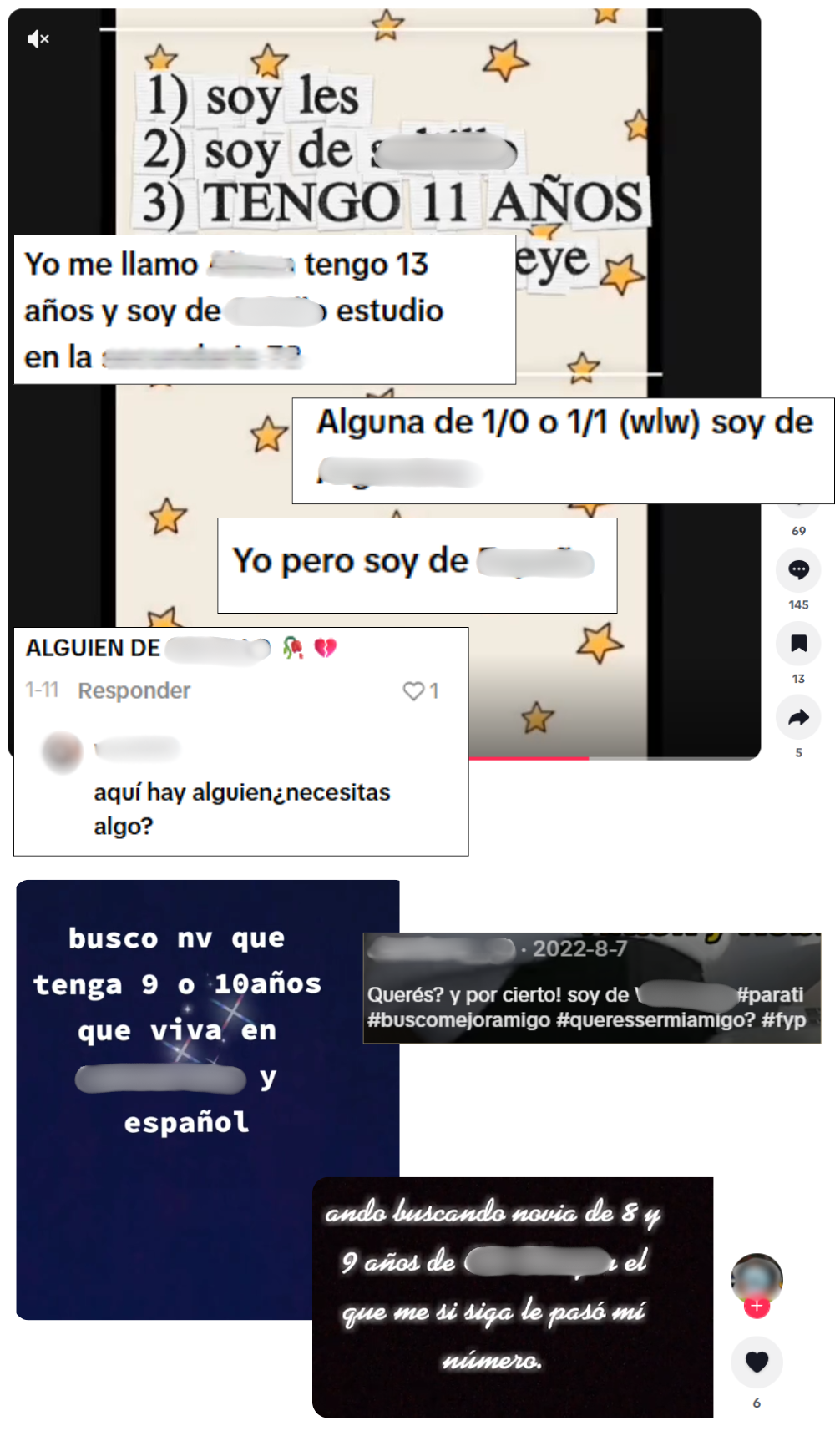
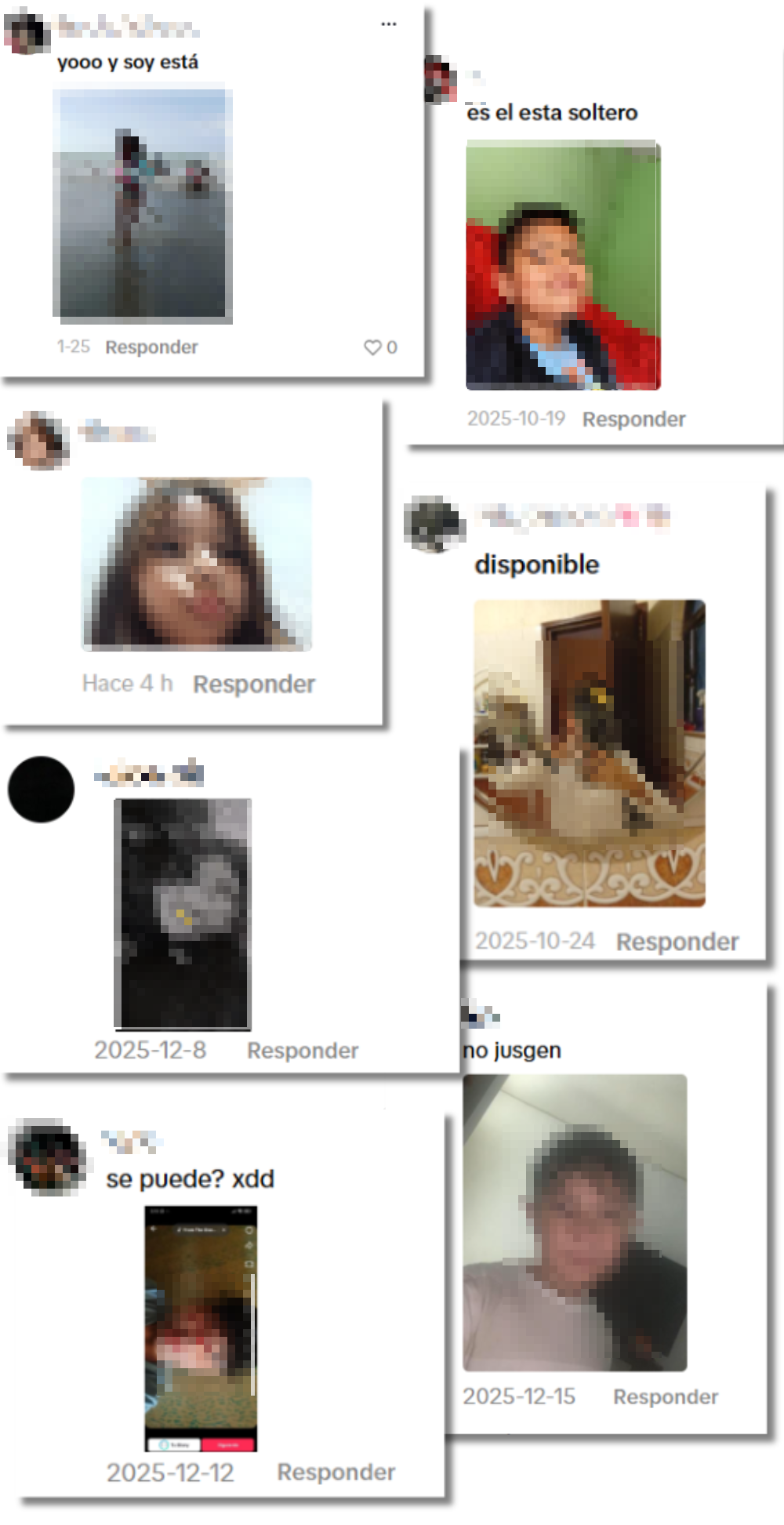
While some users choose to attract attention in these videos with images of influencers, singers or actors, others are minors who show their own faces. In the comments, there are also photos of girls and boys "applying" to be chosen as ‘virtualito’: we can find everything from images of their faces to photos of real girls in bikinis. This poses risks, since this content can be downloaded and collected by any user on the platform.
“I’m hormo”, “we send each other everything”, “I rate boobs in the DMs”: the comments encourage minors to take the conversation to closed platforms like WhatsApp, Zangi and Instagram
The requirements go beyond age. Many videos state "I'm hormo [hormonal]" or "looking for a hormonal friend". In other words, "friends with benefits" with whom to "talk dirty", send "moaning audios" and exchange "very explicit" or "no-clothes" photos.
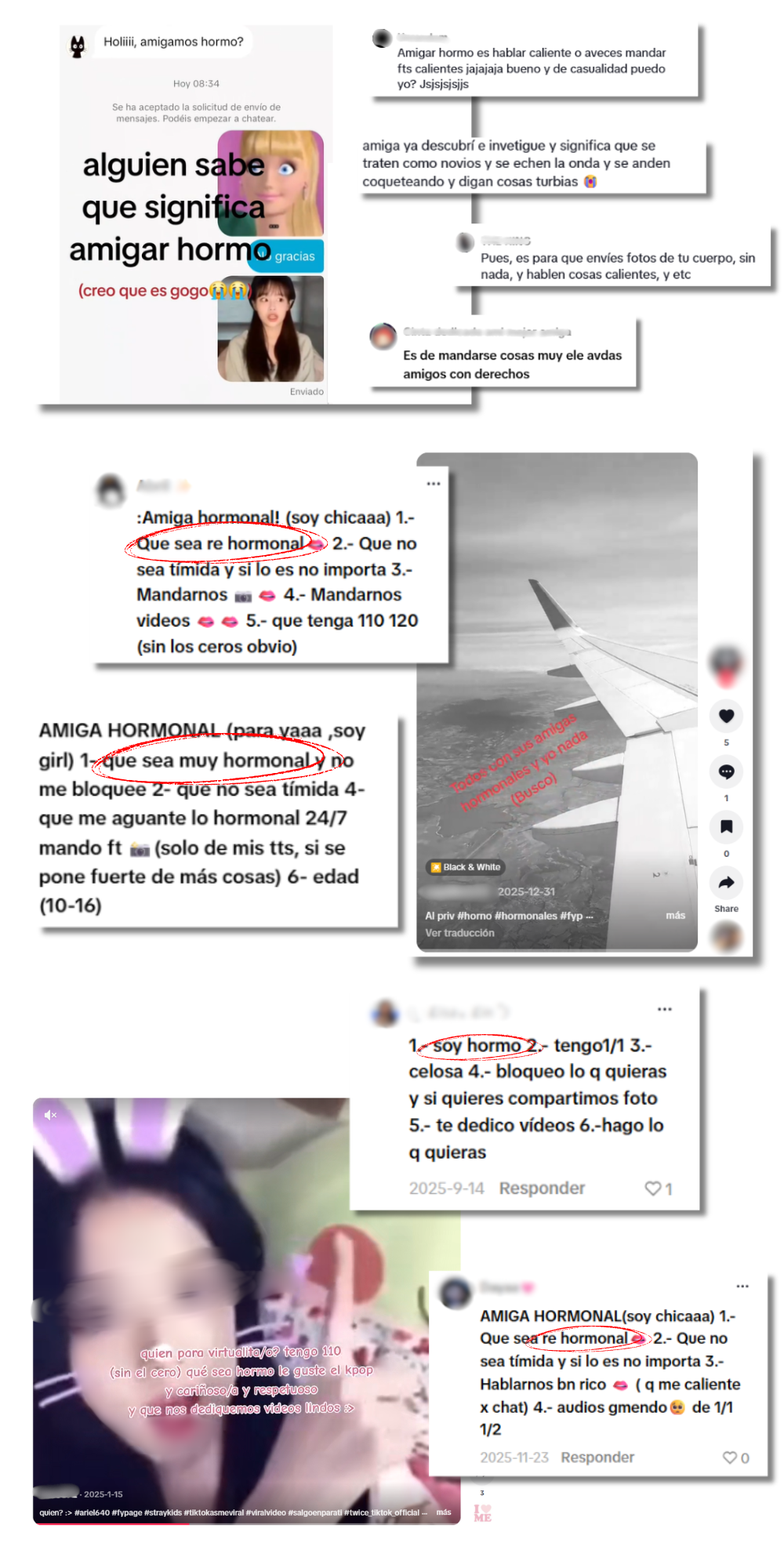
Some comments are direct and don't hide the sexual purpose of these relationships: "We'll send each other everything", "looking for a hot girlfriend", "I'll do whatever you want", "a dominant one?". Among these messages is a trend we have already warned about that can expose minors to sextortion (online extortion using intimate content to threaten or blackmail): messages like "I'll rate boobs in private" or "I'll rate penis pics" to get boys and girls to share their intimate images.
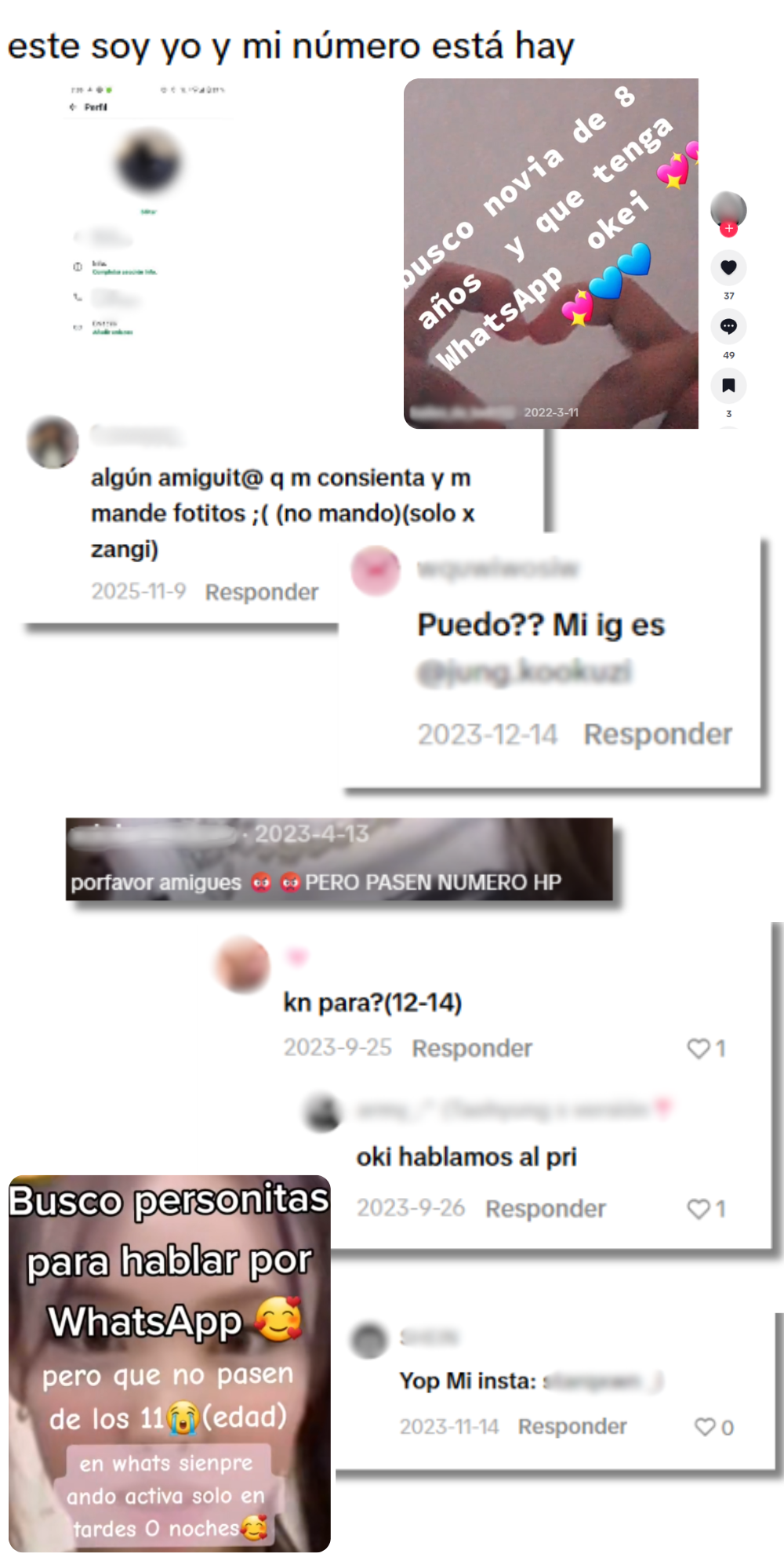
Privately, on Zangi, through Instagram or WhatsApp. This is how content involving minors navigates the vastness of the internet beyond TikTok. In the videos and comments, we find calls to move the conversation with minors to private channels, such as direct messages or other platforms. All this while TikTok claims to prohibit content that “leads or encourages young people to move off-platform due to the risk that the request could be made by a bad actor”.
If you are outside Spain and need help or wish to report child abuse, find your local helpline at Child Helpline International or INHOPE. To report online child sexual abuse material (CSAM) anonymously, you can contact the Internet Watch Foundation (IWF). In an immediate emergency, always contact your local emergency services first.
This article was written with the help of Javier Sanz, a criminologist specializing in cybercrime and cyber behavior analysis and contributor of Maldita.es.
Thanks to your superpowers, knowledge, and experience, we can fight harder and better against lies. The Maldita.es community is essential to stopping misinformation. Help us in this battle: send us any hoaxes you come across to our WhatsApp service, lend us your superpowers, spread our debunkings, and become an Ambassador.
Methodology
For this article, we analyzed 100 videos published on TikTok between August 5, 2020; and January 19, 2026, in which users sought to engage children between the ages of 6 and 12 in alleged romantic or intimate relationships. To do this, we searched the online platform using keywords such as “looking for a virtualito,” “looking for a boyfriend/girlfriend” and “looking for a hormonal friend”. We combined these terms with each of the ages within the analyzed range (6 to 12 years old).
This allowed us to create a sample of 100 videos published by 100 different users, ensuring that there were no duplicate profiles. We collected quantitative and qualitative data from the accounts (user creation date, number of followers, number of likes, and number of videos published) and from the analyzed videos (such as publication date, views, hashtags used, and video text).
In addition, we reviewed every registered profile to look for any indication that the profiles belonged to adults posing as minors or seeking to contact them. We also reviewed the comments on each video looking for users who identified themselves as adults or had photos and videos that revealed their age.
If you have any questions, you can contact us at [email protected]